How Custom Software Improves Manufacturing Efficiency
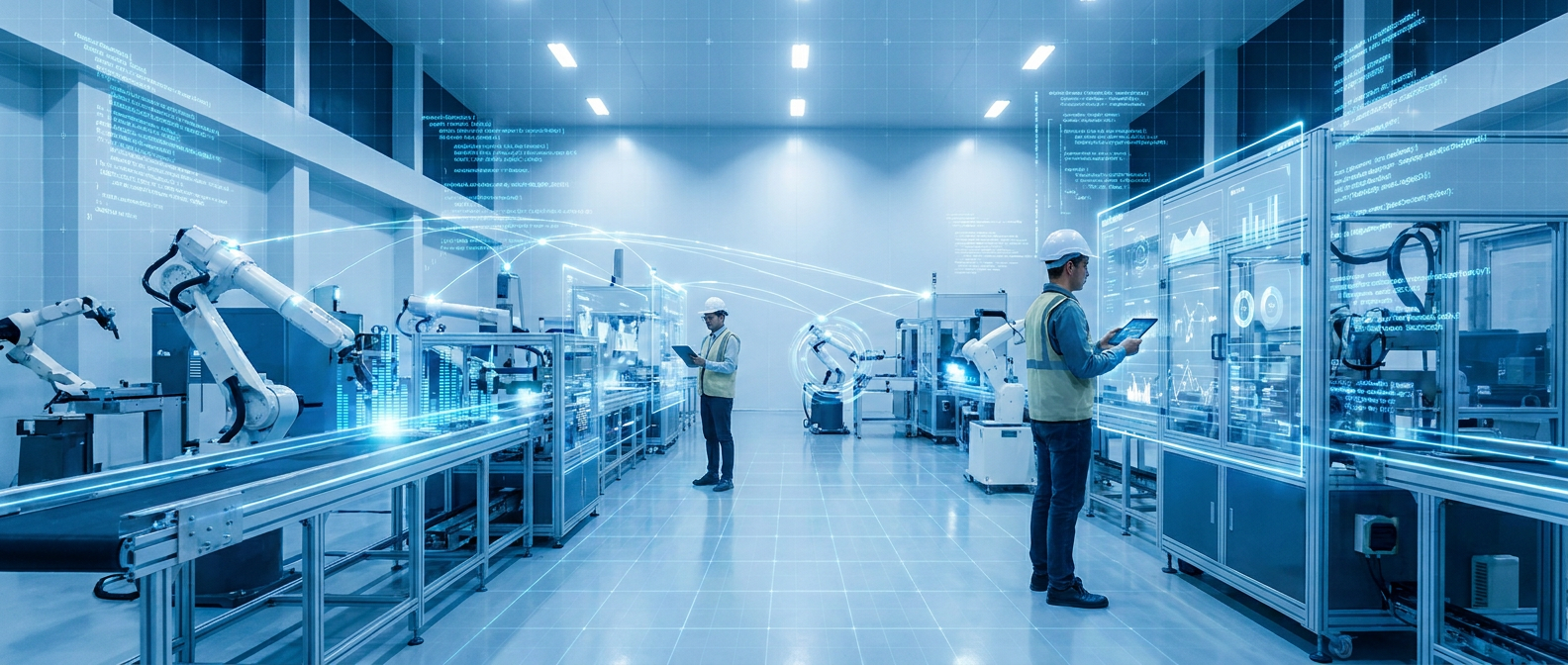
Manufacturing software tools help teams reduce waste and get products to market sooner. Custom modules can match a firm's needs and help speed up production cycles.1, 2
How custom software improves daily production
Software can automate routine work and improve how tasks flow. That reduces time spent on repeated tasks and helps raise output.1, 2
Custom modules can match the needs of a specific factory. This tailored approach can shorten production cycles and improve logistics.2
Live tracking lets teams spot bottlenecks as production runs. They can then address those hold-ups quickly.1
A central system brings process data into one place. Shared access gives teams a clearer view of what is happening.2
Live stock tracking shows what is on hand. Automatic reordering helps avoid both stock shortages and excess stock.1
Barcode or RFID tracking can follow parts, products and other assets.2 Production plans can account for demand forecasts, available resources and plant capacity.1
Software for made-to-order work
ERP means enterprise resource planning, software that links core business processes. The system needs to suit make-to-order, engineer-to-order or batch work.3
Standard ERP packages often fall short for firms that design products for each customer's needs. Engineer-to-order ERP adds support designed for the engineering team.4
Made-to-order work brings a steady flow of new part numbers and bills of materials. These changing parts lists make accurate stock counts harder to maintain.4
Project data often ends up in spreadsheets and sticky notes. Engineer-to-order ERP puts CAD files and purchase orders in one shared system.4
The same system links processes and gives data entry a common format. This removes errors caused by misread information or different ways of recording it.4
Custom and made-to-order production uses ERP and computer-aided manufacturing, or CAM, tools. They support flexible schedules, cost estimates and complex product options.1
Connecting the shop floor with the wider business
A manufacturing execution system, or MES, tracks raw materials as they become finished goods. It supports shop floor control, live production changes and resource schedules.2
Custom ERP platforms can connect with MES tools. This gives teams visibility from the factory floor through to business dashboards.5
Visual AI inspection can work with ERP-linked data tools. This can reduce quality control bottlenecks and increase production yield.5
Product lifecycle management, or PLM, handles information throughout a product's life. It covers specifications, design, prototypes, assembly and testing.2
PLM also covers sales and delivery. Linking PLM with custom ERP gives teams a shared view of factory and business activity.2, 5
Cloud ERP brings production, stock, finance and sales into one platform. It can also connect purchasing and quality control.3
Shared data links production, purchasing, stock and finance for better decisions. A single view of business activity helps improve planning and resource use.3, 5
Mobile tools and cloud systems
Mobile apps put work tools on phones and tablets. Staff can access them on the shop floor, between warehouses or while moving products.6
Cloud ERP keeps production, stock and finance processes on a shared platform. Live data tools support decisions across those linked functions.3
Industrial mobile apps can support stock control and shipping tracking. They can also handle transport, order and staff schedules.6
Mobile tools can include reports, training and compliance functions. Supplier and customer management can also form part of these apps.6
Legacy software can be updated to suit growing production needs. The update can add modern tools while keeping familiar parts of the system.6
Cloud ERP can combine AI-assisted forecasts with live data analysis. Modular systems can scale while linking stock control and production schedules.5
Custom development services with Kraftwire
Kraftwire offers custom software development for bespoke systems. The service is designed around your workflows, rather than making them fit the software.7
Kraftwire offers AI and automation services. The offer is framed around smarter systems.7
Kraftwire offers cloud migrations and infrastructure built to scale. Its platform migration offer is designed to retain SEO and content during a move.7
Sources
FAQ
How do mobile applications improve manufacturing operations?
Mobile apps give staff access to work tools on phones and tablets across factories, warehouses and transport routes. They can support stock control, shipping, schedules, reporting, training and compliance.